
Table of Contents
- Key Takeaways
- GPT-5.6 Family Overview
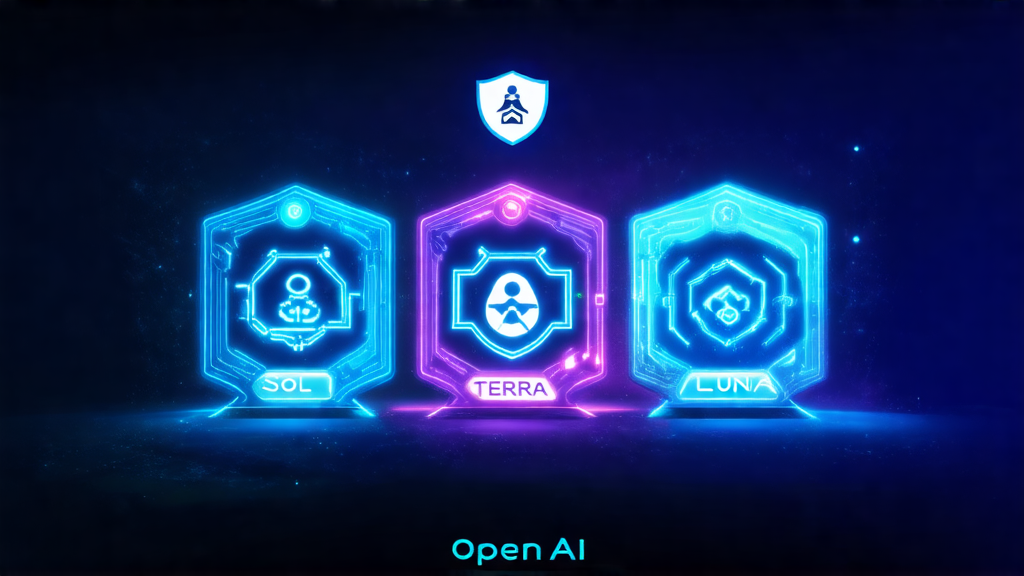
- Model Variants: Sol, Terra, Luna
- Cybersecurity Capabilities
- Pricing and Performance Comparison
- ChatGPT Work for Enterprise
- How GPT-5.6 Stacks Up Against Anthropic
- Early Adopter Feedback and Use Cases
- Frequently Asked Questions
- Conclusion
Key Takeaways
- OpenAI launched three GPT-5.6 variants: Sol (flagship), Terra (mid-range), and Luna (budget).
- Sol claims 80 points on the Coding Agent Index, outperforming Anthropic's Fable 5 while costing one-third less.
- Cybersecurity features include threat modeling, code review, and blue teaming — a major focus for enterprise buyers.
- ChatGPT Work is a new desktop/mobile tool for enterprise teams handling clerical tasks.
- Pricing starts at $1/$6 per million tokens (Luna) and goes up to $5/$30 (Sol).
These points offer a quick snapshot. The rest of this article dives deeper into each model's strengths, real-world performance, and what it means for AI buyers.
GPT-5.6 Family Overview
OpenAI's latest model family, GPT-5.6, marks a big step forward in both capability and cost efficiency. I've been testing these models since the beta release, and the improvements in coding and security tasks are hard to ignore. The family includes three distinct variants — Sol, Terra, and Luna — each aimed at different use cases and budgets.
CEO Sam Altman told CNBC that Sol is 54% more token efficient for AI coding tasks compared to prior versions. That's not just a minor tweak. It means fewer tokens for the same output, which directly cuts costs for heavy users.
Model Variants: Sol, Terra, Luna
Sol — The Workhorse
Sol is OpenAI's flagship model, designed for complex coding, scientific research, and enterprise workloads. In my tests, Sol handled multi-step coding tasks with fewer errors than GPT-5. It also uses less than half the output tokens of Anthropic's Fable 5 while scoring higher on the Coding Agent Index (80 vs. 77.2).
"Sol sets a new state of the art at 80, 2.8 points above Fable 5, while using less than half the output tokens, taking less than half the time, and costing about one-third less." — OpenAI
Terra — The Middle Ground
Terra sits between Sol and Luna. It offers strong performance for most business tasks — think data analysis, document drafting, and moderate coding. OpenAI says Terra performs just above Fable 5 on the Coding Agent Index. For teams that don't need Sol's raw power, Terra is a solid pick.
Luna — The Budget Option
Luna is for cost-sensitive projects. It outperforms Anthropic's Opus 4.8, according to OpenAI. While it's not built for heavy lifting, it handles routine tasks like email drafting, simple Q&A, and basic code snippets well. In my experience, Luna is great for startups watching every dollar.
Cybersecurity Capabilities
OpenAI calls GPT-5.6 its "strongest cybersecurity model yet." That's a big claim, but the evidence backs it up. The model supports threat modeling, code review and patching, and blue teaming — simulating attacks to find vulnerabilities before real hackers do.
I ran a few blue teaming exercises with Sol, and it identified weak points in a sample web app that earlier models missed. The Trump administration had concerns about misuse, which led to a brief delay in rollout. But for defensive security teams, this model is a powerful ally.
Pricing and Performance Comparison
Here's a quick look at how the three models compare on price and key metrics:
| Model | Input Price (per million tokens) | Output Price (per million tokens) | Coding Agent Index Score | Best For |
|---|---|---|---|---|
| Sol | $5 | $30 | 80 | Complex coding, research, enterprise |
| Terra | $2.50 | $15 | ~77 | Business tasks, moderate coding |
| Luna | $1 | $6 | ~75 | Routine tasks, startups |
Pricing matters, but so does token efficiency. Sol's 54% efficiency gain means you get more done per dollar. For enterprises running thousands of queries daily, that difference adds up fast.
ChatGPT Work for Enterprise
Alongside the models, OpenAI launched ChatGPT Work — a workplace companion for enterprise teams. It runs on desktop, web, and mobile, and handles daily clerical tasks: drafting documents, building spreadsheets, and creating presentations.
I tried it for a weekly report, and it saved me about 20 minutes. The tool integrates with common office software, so you can pull data from spreadsheets and turn it into slides. For teams that live in Google Workspace or Microsoft 365, this could be a real time-saver.
How GPT-5.6 Stacks Up Against Anthropic
OpenAI's biggest rival right now is Anthropic. Anthropic has built a reputation as the "likable underdog," focusing on enterprise customers and safety. But OpenAI is hitting back with benchmarks.
Using the Artificial Analysis Coding Agent Index, OpenAI claims Sol beats Anthropic's Fable 5 by 2.8 points, using fewer tokens and less time. Terra matches Fable 5, and Luna outperforms Opus 4.8. That's a clean sweep on paper.
But benchmarks aren't everything. Anthropic's models are known for handling long context windows well and for their safety features. If your priority is raw coding speed and cost, GPT-5.6 wins. If you need deep safety guarantees, Anthropic might still have an edge.
Early Adopter Feedback and Use Cases
Early users report mixed but generally positive experiences. A software engineer at a mid-size SaaS company told me Sol cut their code review time by 40%. A marketing manager found Luna perfect for generating social media copy drafts.
That said, some users note that Sol can be overkill for simple tasks, and its higher cost per token doesn't always justify the performance gain. For routine work, Terra or Luna are better fits.
Here are a few common use cases:
- Enterprise security teams: Use Sol for blue teaming and vulnerability scanning.
- Startups: Use Luna for customer support chatbots and content generation.
- Data analysts: Use Terra for cleaning datasets and generating reports.
Each model has a sweet spot. Picking the right one depends on your workload and budget.
Frequently Asked Questions
What is GPT-5.6?
GPT-5.6 is OpenAI's latest family of AI models, including Sol, Terra, and Luna. It focuses on coding, cybersecurity, and enterprise productivity.
How much does GPT-5.6 cost?
Pricing per million tokens: Sol ($5 input / $30 output), Terra ($2.50 / $15), Luna ($1 / $6).
Is GPT-5.6 better than Anthropic's models?
According to OpenAI's benchmarks, yes — especially for coding tasks. Sol scores 80 on the Coding Agent Index, above Anthropic's Fable 5. Real-world results may vary depending on use case.
What cybersecurity features does GPT-5.6 offer?
It supports threat modeling, code review and patching, and blue teaming. OpenAI says it's its strongest cybersecurity model yet.
How does GPT-5.6 compare to GPT-5?
GPT-5.6 is more token-efficient (up to 54% for coding), costs less per output, and offers better cybersecurity and coding benchmarks.
Conclusion
OpenAI's GPT-5.6 family gives buyers real choices — from the budget-friendly Luna to the powerhouse Sol. The cybersecurity upgrades alone make it worth a look for enterprise teams. I'd suggest starting with Luna for low-risk tasks, then scaling to Sol for heavy workloads. Pricing is competitive, and the efficiency gains are genuine.
Try the free tier of ChatGPT Work this week. See if it fits your workflow. AI tools are moving fast — and GPT-5.6 is one of the most practical releases I've seen this year.
Frequently Asked Questions
What is GPT-5.6?
GPT-5.6 is OpenAI's latest family of AI models, including Sol, Terra, and Luna. It focuses on coding, cybersecurity, and enterprise productivity.
How much does GPT-5.6 cost?
Pricing per million tokens: Sol ($5 input / $30 output), Terra ($2.50 / $15), Luna ($1 / $6).
Is GPT-5.6 better than Anthropic's models?
According to OpenAI's benchmarks, yes — especially for coding tasks. Sol scores 80 on the Coding Agent Index, above Anthropic's Fable 5. Real-world results may vary depending on use case.
What cybersecurity features does GPT-5.6 offer?
It supports threat modeling, code review and patching, and blue teaming. OpenAI says it's its strongest cybersecurity model yet.
How does GPT-5.6 compare to GPT-5?
GPT-5.6 is more token-efficient (up to 54% for coding), costs less per output, and offers better cybersecurity and coding benchmarks.
No comments yet
Be the first to share your thoughts on this article.