
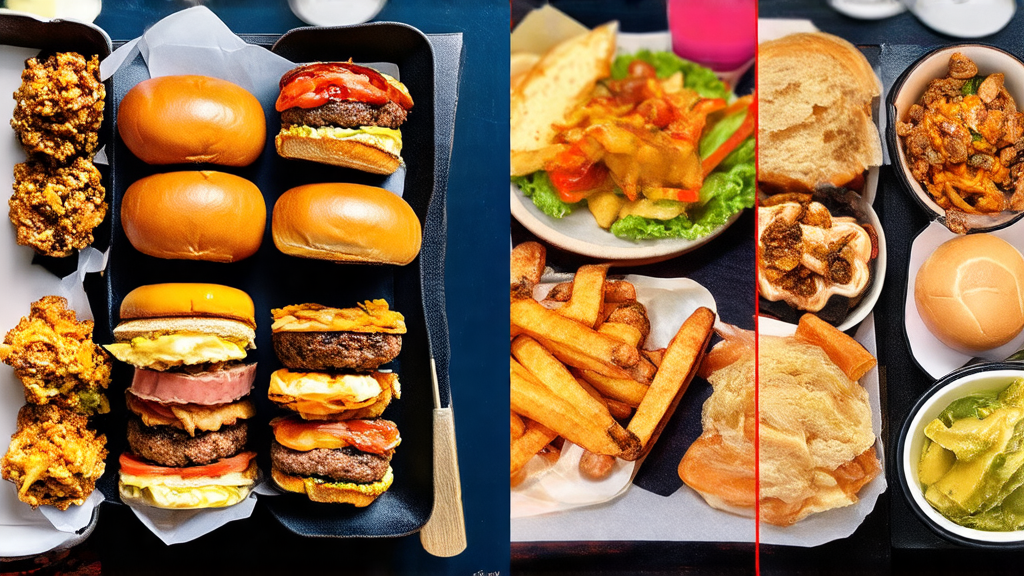
Walk into a modern café and you might see something odd: a menu board featuring a bagel sandwich with perfectly symmetrical sesame seeds, a burger with lettuce that curls like plastic, and ice cream scoops that look machine-tooled. At first, you cannot say why it bothers you. Then it hits you — every item looks fake. The sameness problem behind those unappetizing AI-generated menus has become impossible to ignore.
This is not a one-off design failure. It is a systemic issue baked into generative AI models, and it matters for any restaurant owner tempted to use AI as a shortcut.
What Creates the Homogenized Look of AI-Generated Menus?
Generative image tools are trained on enormous datasets scraped from across the internet. Those datasets are full of corporate chain menus, stock food photography, and advertising images that all follow a narrow visual formula. When a model is asked for a burger restaurant menu, it draws on that corpus and produces something that looks like a chain menu from a decade ago.
As Reality Defender CTO Alex Lisle told TechCrunch, the output often resembles ‘a Chili’s menu from 2015’ because that is the dominant source material the model learned from. This convergence is not model collapse — the catastrophic degradation that can happen when AI trains on its own output — but it is a quieter form of decline. Every new AI-generated menu reinforces the same clichés until the visual language becomes a feedback loop.
Why Do AI-Generated Food Images Look So Unappetizing?
The problem goes deeper than boredom. AI models are optimized for ‘pleasingness.’ They smooth away the edges, the imperfections, and the texture that make food feel real. The result is a menu full of food that nobody can actually imagine eating.
One of the clearest examples came from an X user named Labtec, who created a menu in ChatGPT and then edited it 100 times. Each edit made the food less recognizable: the tacos became more plastic, the sauce lost its droplets, and the steam vanished. TechCrunch repeated the experiment and found the same effect. This is the sameness problem in action — the AI constantly averages itself toward a safe, sterile ideal.
Visually, a fake burrito may have cheese that looks too bubbly and too perfect. Shrimp can appear curved into unnatural Lovecraftian shapes. Even ordinary menu items often have a waxy sheen that triggers an immediate, instinctive sense of wrongness.
The Business Cost of an AI-Generated Menu
Customers may not be able to articulate why, but their brains notice. Trust is hard-won and easily lost. A menu that feels alien distances people from your restaurant before they have taken a single bite. Worse, if those AI images are posted to social media, the restaurant can become known for its odd, synthetic visuals instead of its food.
There is also an operational concern. Restaurants that lean on AI for these tasks without review are unknowingly contributing to the next round of training data. When AI-generated images are published online, they may be swept back into future datasets. Over time, the signal-to-noise ratio drops and the industry faces faster homogenization.
How Restaurants Can Use AI Without Losing Authenticity
AI can still be a useful menu-design assistant. The key is to keep human judgment at the center. Here are some practical ways to avoid unappetizing AI-generated menus:
- Use AI for layout ideas or wording, not for final food photography. Commission a real food stylist or take photos of the actual dishes.
- If you generate concept art, treat it as a rough draft. Edit aggressively to add shadows, texture, irregular edges, and realistic portion sizes.
- Create a custom photo library of your own menu items over time. The more original visual assets you own, the less your brand resembles the generic AI aesthetic.
- Train your team to spot AI tells — symmetrical garnishes, overly glossy surfaces, impossible structures, and consistent lighting from one fake image to another.
- Consider using AI detection tools to review prepared materials if you are working with freelance designers or vendors who might quietly rely on generated stock.
The Future of AI Menus Depends on Better Data
Model builders have a responsibility to improve training data and watermark synthetic imagery. Tools that detect AI-generated content are emerging precisely because this problem is widespread. But for now, the most effective defense is human curation.
Restaurants can still benefit from generative AI, but they should not hand the menu over to a model. The restaurants that stand out will be those that combine the efficiency of AI with the texture, personality, and unpredictability that make food genuinely appealing.
Conclusion
The sameness problem behind those unappetizing AI-generated menus is not merely a visual quirk. It is a signal that the data driving AI is narrow, self-referential, and disconnected from the real world of cooking, cuisine, and appetite. When you understand why AI food looks so strange, you can make smarter choices about how to use the technology. The best recipe for success is simple: let AI help with the foundation, but never let it cook the meal alone.
Frequently Asked Questions
Why do AI-generated menus have a homogenized look?
Generative image tools are trained on internet datasets filled with corporate chain menus, stock food photography, and advertising images that follow a narrow visual formula. When asked for a menu, the model pulls from that corpus and produces something resembling a generic chain menu from years ago. This creates a feedback loop where every new AI-generated menu reinforces the same clichés.
Why does AI-generated food imagery look fake or unappetizing?
AI models are optimized for pleasingness, so they smooth away imperfections, texture, and irregular edges that make food feel real. The result is food that looks plastic or sterile: overly perfect cheese, unnaturally curved shrimp, glossy waxy surfaces, and missing realistic details like sauce droplets or steam.
What are the business risks of using AI-generated menus?
Customers may instinctively sense something is wrong even if they cannot explain it, which hurts trust in the restaurant. If synthetic images are posted on social media, the restaurant can become known for odd, fake-looking visuals instead of its actual food. There is also an operational risk: published AI images can be swept into future training data, further accelerating homogenization.
How can restaurants use AI without losing authenticity?
Restaurants should use AI for layout ideas or wording rather than final food photography, hire real food stylists or photograph actual dishes, treat AI concept art as a rough draft, build a custom photo library of their real menu items, train staff to spot AI tells, and use AI detection tools when reviewing work from outside designers or vendors.
What is needed to improve the future of AI-generated menus?
Model builders need to improve training data and watermark synthetic imagery, and more AI detection tools should be used. However, the most effective defense right now is human curation. Restaurants should combine AI's efficiency with human judgment, texture, personality, and real-world appeal instead of letting a model handle the menu alone.
No comments yet
Be the first to share your thoughts on this article.